The Shift from Traditional SCADA to Cloud-Based Monitoring Explained
- Feb 15
- 3 min read
Industrial operations have long relied on SCADA (Supervisory Control and Data Acquisition) systems to monitor and control equipment. These traditional systems have served well for decades, but a new approach is rapidly gaining ground: cloud-based monitoring. This shift is changing how industries track performance, respond to issues, and manage data. Understanding why cloud-based monitoring is replacing traditional SCADA extensions can help businesses make smarter decisions about their technology investments.
What Traditional SCADA Systems Offer
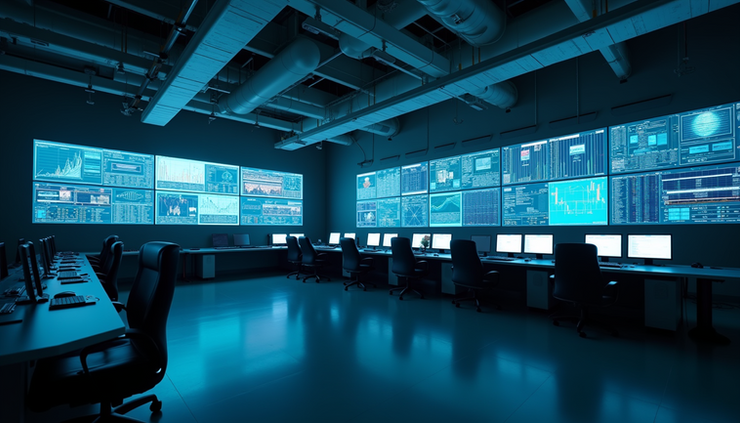
Traditional SCADA systems connect sensors and devices on-site to a central control unit. Operators use this setup to monitor processes like water treatment, manufacturing lines, or power grids. These systems collect data, trigger alarms, and allow manual or automated control of equipment.
While reliable, traditional SCADA has limitations:
Local infrastructure dependency: SCADA requires physical servers and hardware on-site.
Limited scalability: Expanding the system means adding more hardware and software licenses.
Data silos: Information often stays within the facility, making it hard to share or analyze broadly.
Maintenance challenges: Hardware failures or software updates require on-site attention.
These factors can slow down response times and increase costs, especially for companies with multiple locations or complex operations.
How Cloud-Based Monitoring Changes the Game
Cloud-based monitoring moves data collection and analysis to remote servers accessed over the internet. Instead of relying on local hardware, sensors send information to cloud platforms where it is stored, processed, and visualized.
This approach offers several advantages:
Accessibility: Operators and managers can view real-time data from anywhere using a web browser or mobile app.
Scalability: Adding new devices or locations is easier and less costly since it doesn’t require physical infrastructure changes.
Centralized data: Cloud platforms aggregate data from multiple sites, enabling comprehensive analysis and reporting.
Automatic updates and maintenance: Cloud providers handle software updates and server upkeep, reducing downtime.
Cost efficiency: Pay-as-you-go pricing models reduce upfront investments and allow better budget control.
For example, a water utility company with plants across a region can monitor all sites from a single dashboard, quickly spotting issues and coordinating responses.
Practical Benefits for Industrial Operations
Cloud-based monitoring supports faster decision-making and improves operational efficiency. Here are some specific benefits:
Improved fault detection: Cloud analytics can identify patterns and anomalies that might be missed by traditional systems.
Predictive maintenance: By analyzing historical data, cloud platforms can forecast equipment failures before they happen.
Remote troubleshooting: Technicians can diagnose problems without traveling to the site, saving time and travel costs.
Enhanced collaboration: Teams across different locations can access the same data and coordinate actions more effectively.
Regulatory compliance: Automated reporting tools help maintain records and meet industry standards.
A manufacturing plant using cloud monitoring reduced downtime by 20% within six months by catching equipment issues early and scheduling maintenance proactively.

Addressing Common Concerns
Despite the benefits, some companies hesitate to adopt cloud-based monitoring due to concerns about security, reliability, and integration.
Security: Cloud providers invest heavily in cybersecurity, often exceeding what individual companies can afford. Data encryption, multi-factor authentication, and regular audits protect sensitive information.
Reliability: Cloud platforms use redundant servers and backup systems to ensure continuous operation. Many offer service-level agreements guaranteeing uptime.
Integration: Modern cloud solutions support standard protocols and APIs, making it easier to connect with existing SCADA equipment and other software.
Transitioning to cloud monitoring does not mean abandoning traditional SCADA immediately. Many organizations use hybrid models, gradually moving functions to the cloud while maintaining critical local controls.
Steps to Move Toward Cloud-Based Monitoring
For companies considering this shift, a clear plan helps ensure success:
Assess current systems: Identify which parts of the SCADA system can benefit most from cloud integration.
Choose the right platform: Look for cloud providers with experience in industrial monitoring and strong security practices.
Pilot projects: Start with a small-scale deployment to test performance and address challenges.
Train staff: Ensure operators and IT teams understand the new tools and workflows.
Plan for data migration: Develop strategies to transfer historical data and maintain continuity.
Monitor and optimize: Use feedback and analytics to improve system performance over time.
The Future of Industrial Monitoring
Cloud-based monitoring is not just a trend but a practical evolution in industrial control. It supports smarter, faster, and more flexible operations. As more companies adopt cloud solutions, expect to see innovations like artificial intelligence-driven analytics, edge computing integration, and enhanced mobile access.
Businesses that embrace this shift can reduce costs, improve safety, and gain a competitive edge by making data-driven decisions in real time.


Comments