Smart Agriculture in Australia with ProSight for Smarter Irrigation Decisions
Water is one of the hardest inputs to manage on an Australian farm. Too little water cuts yield and stresses crops. Too much water wastes energy, pushes nutrients beyond the root zone, and can leave paddocks waterlogged at the wrong time.
Smart agriculture solutions help take the guesswork out of that daily decision. Instead of relying only on a visual check, a drive around the property, or yesterday’s weather report, farmers can use live field data to decide when to irrigate, how much to apply, and where attention is needed first.
ProSight brings key monitoring points together in one system, including soil-moisture sensors, weather stations, tank-level sensors, flow meters, and irrigation controls. The result is a clearer picture of what is happening across the farm, from root zone moisture to water storage and irrigation performance.

Why irrigation decisions are getting harder in Australia
Australian growers manage irrigation under highly variable conditions. A wet week can turn into a dry spell quickly. Heatwaves increase crop water demand. Wind can affect irrigation performance. Water allocations, pumping costs, and labour availability all shape what is practical on any given day.
That means irrigation timing matters. A decision made too late can leave crops under stress. A decision made too early can waste water that may be needed later in the season.
For many farms, the challenge is not a lack of experience. It is that the field conditions are changing faster than manual checks can capture. Irrigation decisions often need answers to several questions at once:
Is there enough soil moisture in the crop root zone?
Is the crop likely to need water tomorrow, based on weather conditions?
Is there enough water in tanks or storage to complete the planned irrigation?
Is water actually moving through the system at the expected rate?
Can irrigation be started, stopped, or adjusted without a trip to the paddock?
A comprehensive monitoring system is useful because it links these questions. One sensor tells part of the story. A connected system gives context.
How ProSight connects the key parts of farm water management
ProSight supports smarter irrigation by integrating field data from multiple sources. Each part plays a different role, but the real value comes from seeing them together.
Soil-moisture sensors show what is happening below the surface
Soil moisture monitoring systems are central to efficient irrigation. The surface can look dry while the root zone still has water available. The opposite can also happen after light rain, where the topsoil looks damp but moisture has not moved deep enough to benefit the crop.
Soil-moisture sensors help track water in the profile. Depending on the setup, sensors may be placed at different depths to show how water moves through the root zone after irrigation or rainfall.
This helps answer practical questions:
Has irrigation reached the active root zone?
Is moisture dropping faster than expected?
Is water moving too deep, beyond where plants can use it?
Are different blocks or paddocks behaving differently?
For crops with changing water needs through the season, this information can be especially valuable. It supports decisions based on the plant’s likely access to water, not just the calendar.
Weather stations add local conditions to the picture
A weather forecast is useful, but a local weather station gives farm-level data. Temperature, rainfall, humidity, wind, and other conditions all affect crop water use and irrigation timing.
A hot, windy day can increase water demand and reduce irrigation efficiency. Recent rain can delay the need to irrigate. High wind may make some irrigation methods less effective.
When ProSight integrates weather station data with soil-moisture readings, the system helps build a clearer view of both supply and demand. Soil sensors show what water is available. Weather data helps explain why that level is changing and what may happen next.
Tank-level sensors make water storage visible
Water availability is just as important as crop demand. Tank-level sensors let farmers monitor stored water without physically checking every tank or storage point.
This matters on properties where tanks are spread across large distances, or where water supports both irrigation and livestock operations. A low tank level can interrupt a planned irrigation cycle. An unexpected drop may suggest a leak, open valve, or pump issue.
With tank-level monitoring in ProSight, water storage becomes part of the irrigation decision rather than an afterthought. Farmers can plan irrigations with a clearer understanding of available supply.

Flow meters confirm that water is moving as planned
A pump may be running, but that does not always mean the right amount of water is reaching the crop. Flow meters help measure water movement through pipes, channels, or irrigation lines.
Flow data can help identify problems such as:
Blocked filters or lines
Pump performance issues
Leaks or breaks
Unexpected pressure changes
Irrigation zones receiving too much or too little water
For irrigated agriculture, this is important because timing and volume both affect crop response. If the flow rate is lower than expected, an irrigation event may not apply enough water. If the flow rate is higher than expected, water may be wasted or applied unevenly.
By feeding flow meter data into ProSight, farmers can compare what was planned with what actually happened. That feedback can improve irrigation scheduling and help detect faults earlier.
Irrigation controls turn monitoring into action
Data is useful, but it becomes more powerful when it supports direct control. Irrigation controls allow farmers to start, stop, or manage irrigation equipment based on the system design and farm requirements.
When irrigation controls connect with sensor data, decisions can become faster and more precise. For example, if soil moisture is still within the preferred range and rain has recently fallen, irrigation may be delayed. If a key block is drying quickly and tank levels are adequate, irrigation can be scheduled with more confidence.
Remote control also reduces the need to travel across the property for routine checks and adjustments. That can save time, especially where pumps, valves, tanks, and paddocks are far apart.
The goal is not to remove human judgement. Good irrigation still depends on local knowledge, crop stage, soil type, and farm priorities. ProSight gives farmers better information and practical control so those decisions are easier to make.

The value of remote farm monitoring
Remote farm monitoring is one of the biggest advantages of connected agriculture. Instead of relying on a manual inspection schedule, farm managers can check key conditions from a phone, tablet, or computer.
This can change the rhythm of daily work. A grower can check tank levels before sending someone to a pump site. A manager can review soil moisture trends before starting irrigation. A fault can be spotted earlier because the data does not look right.
Remote monitoring is useful across many Australian farming systems, including horticulture, broadacre irrigation, dairy, mixed farming, and grazing enterprises with distributed water infrastructure.
Key benefits include:
Fewer unnecessary site visits
Remote data reduces the need to drive long distances just to confirm a level, reading, or equipment status.
Earlier issue detection
A sudden fall in tank level or abnormal flow reading may point to a leak, stuck valve, or pump fault.
Better water planning
Live storage, soil, and weather data help match irrigation plans to actual farm conditions.
Improved labour use
Staff can focus on repairs, crop work, and priority jobs instead of routine checks.
More confidence during weather changes
Local weather readings and soil moisture trends help guide decisions after heat, rain, or wind.
Remote monitoring also supports farms where decision-makers are not always on site. Many operations rely on contractors, managers, family members, or staff working across different locations. Shared access to the same field data can help everyone work from a common picture.
Why soil moisture monitoring deserves special attention
Among all the data points in smart agriculture, soil moisture often has the closest link to irrigation decisions. It shows whether water is available where the crop needs it.
Visual signs of crop stress can appear after the plant has already been under pressure. By the time leaves wilt or growth slows, the best irrigation window may have passed. Soil moisture monitoring gives earlier warning.
It can also help avoid overwatering. In some soils, excess irrigation can push water below the root zone. That water is no longer useful to the crop and may carry nutrients with it. In heavier soils, too much water can reduce air in the root zone and affect plant health.
Soil moisture trends are often more useful than one reading alone. ProSight can help farmers see whether moisture is falling steadily, holding after rainfall, or dropping faster in one paddock than another. Those patterns support better timing.
A strong soil moisture monitoring approach usually considers:
Sensor placement in representative parts of the paddock
Sensor depth based on crop root zones
Soil type and water-holding capacity
Crop stage and expected water use
Irrigation method and application rate
Rainfall and local weather conditions
This is where experience and technology work well together. A farmer may know a paddock has sandy sections, heavy patches, or areas that dry out first. Sensors can confirm those patterns and show how quickly conditions change.
What a connected irrigation decision can look like
A single irrigation decision may draw from several parts of the ProSight system.
A grower checks soil moisture and sees that one crop block is nearing the lower limit of the preferred range. The farm weather station shows hot conditions are likely to continue, with no useful rain recorded on site. Tank-level sensors show enough stored water for the planned irrigation. Flow meters from the previous run confirm the system delivered water at the expected rate. Irrigation controls allow the grower to start the relevant zone without driving to the valve site.
That decision is based on a chain of evidence:
Data source | What it helps confirm |
Soil-moisture sensors | Whether the root zone needs water |
Weather stations | How local conditions may affect crop demand |
Tank-level sensors | Whether enough water is available |
Flow meters | Whether the irrigation system is performing as expected |
Irrigation controls | Whether the right action can be taken at the right time |
This is the promise of Smart Agriculture in Australia with ProSight for Smarter Irrigation Decisions. The system brings farm water data into one place so irrigation choices can be planned, checked, and adjusted with more confidence.
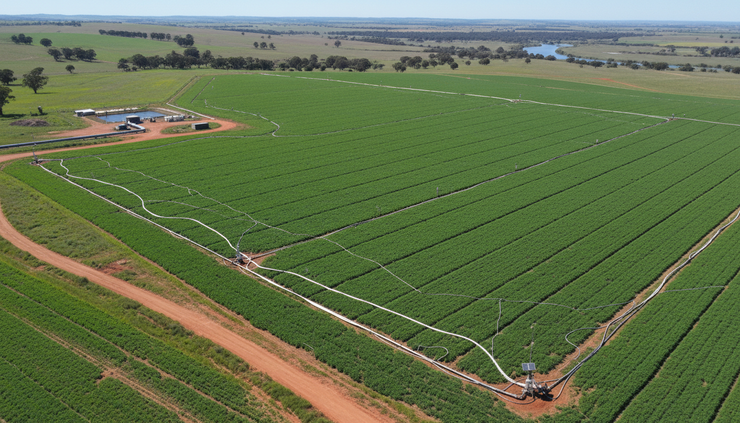
Practical gains for Australian farms
The benefits of ProSight depend on how the system is set up and used, but the gains often come from simple improvements repeated across the season.
Better irrigation timing can reduce avoidable crop stress. Better flow and tank monitoring can reduce surprises. Remote access can shorten the time between a problem appearing and someone acting on it.
For farms managing multiple blocks, pumps, or water sources, this joined-up view can be especially useful. It helps answer the daily irrigation question with less uncertainty: what needs water, what water is available, and is the system ready to deliver it?
Smart agriculture solutions also build a record over time. Past moisture trends, irrigation events, weather conditions, and water movement can help refine future decisions. The longer a farm uses consistent data, the easier it becomes to understand normal patterns and spot unusual ones.
Smarter irrigation starts with better visibility
Irrigation will always involve judgement. Soil type, crop stage, water availability, equipment, and weather all matter. ProSight supports that judgement by connecting the measurements that matter most: soil moisture, local weather, tank levels, flow rates, and irrigation controls.
For Australian farms, where water can be limited, expensive, or difficult to move, better visibility is not a luxury. It is a practical tool for protecting crops, reducing waste, and making each irrigation decision with greater confidence.
The best irrigation decision is rarely based on one reading. It comes from seeing the whole system clearly, then acting at the right time. ProSight helps make that possible.


.png)
Comments